In 2012 the Otto Mønsted Foundation granted a three-month guest professorship at DTU Physics to Professor Desmond Francis McMorrow from the London Centre for Nanotechnology at University College London. The Guest Professor has now arrived and will be at DTU Physics until mid-September 2013.
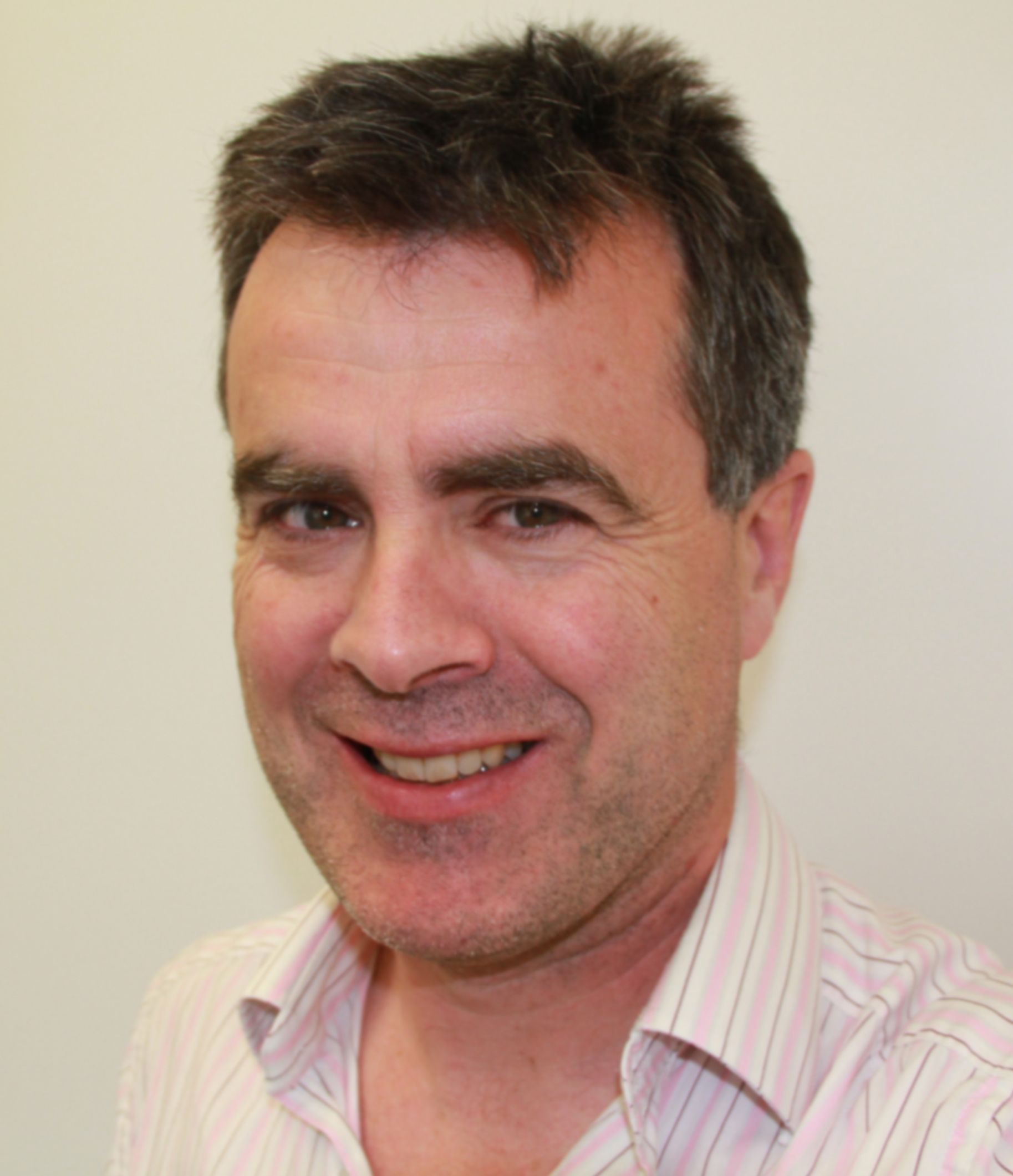 Des McMorrow is among the world’s leading scientists within x-ray and neutron science. From 1993 to 2003 he worked at Risø. Since 2004 he has been Professor at the London Centre for Nanotechnology (LCN), and University College London (UCL). McMorrow’s scientific fields of interest are centered on the fundamental understanding of the behavior of electrons in solids. Read more about this in the interview below.
Together with Danish Jens Als-Nielsen, Des McMorrow authors the world’s leading book on x-ray science, ”Elements of Modern X-ray Physics”. Furthermore he has contributed strongly to the development of methods and instruments at large scale research facilities such as the neutron and synchrotron x-ray sources ISIS and Diamond in England. Read more about Des McMorrow.
During his stay, Des McMorrow will give a lecture for researchers and students about the use of x-rays and neutrons in modern materials research. It is expected that his stay at DTU Physics will stimulate collaborations with UCL and several research units at DTU. It will also contribute to strengthening DTUs role in relation the large scale x-ray and neutron-facilities that are due to open in Lund (
European Spallation Source, ESS and the synchrotron
MAX-IV) and Hamburg (
European Free Electron Laser, XFEL). DTU is involved in several large instrument development projects at these facilities.
4 questions for Des McMorrow
What are your particular research interests?
I am interested in how new states of electronic matter arise in solids, and in developing new experimental techniques to characterize them at the atomic level. Electrons in solids organize themselves in myriad and surprising ways, often endowing the material with useful, functional properties. I work on a number of different classes of materials, including unconventional superconductors, multiferroics and quantum magnets. At present I am dedicating most of my efforts to understand the implications of strong spin-orbit coupling in 5d transition metal oxides, which are predicted to host a raft of unusual electronic states.
Why were you interested in coming to DTU Physics?
I was interested in coming to DTU Physics for a variety of reasons. First and foremost to renew the very good scientific collaborations I had formed during my ten years in Denmark up until I returned to the UK at the end of 2003. A lot has happened in the intervening years and it was timely to catch up with it all. It is also clear that with the advent of the new X-ray and neutron sources in the Oresund region, we are at the advent of a new chapter in the area of science of most direct interest to me, and I would like to understand how I can both contribute to it and how it will benefit my research.
What do you hope to gain from your stay at DTU Physics?
I hope that taking three months to visit DTU will give me the time and space to generate new ideas and collaborative projects, both on the research side, and also on the training of PhD students, an area of great interest to me.
What is your opinion of ESS, MAX-IV and XFEL and DTU’s engagement?
That’s a tough question to answer in anything less than a 3000 page document! The three sources, in their very different ways, will be engines of progress across a vast range of science and technology. The first two will help transform the Oresund into one of the world’s great scientific hubs. The fact that they are on the doorstep is a golden opportunity for DTU, and it will be interesting to find out how DTU intends to embrace it. As far as X-ray free-electron lasers are concerned it is probably difficult to overstate their possible impact. DTU is already playing a leading role in their exploitation and will no doubt build on this in the future.